
 Kia Sportage: Exterior care
General exterior care
When using any chemical cleaner or polish on your Kia Sportage, follow the product label carefully. Read all warnings and cautions before use, and apply the product only as directed.
Note
Reflected sunlight from a stainless-steel sign or a glass building can damage plastic exterior trim, including the bumpers, spoiler, garnish, lamps and outside mirrors. To help prevent this, park away from areas where strong reflections may reach the vehicle or cover the vehicle. The exterior trim fitted to your Kia Sportage may vary by vehicle specification.
Paint finish care
Washing
To protect the Kia Sportage finish from corrosion and deterioration, wash the vehicle thoroughly at least once a month using lukewarm or cold water.
If you drive off-road, wash the vehicle after each trip. Pay particular attention to removing salt, dirt, mud and other deposits. Keep the drain holes along the lower edges of the doors and rocker panels clear. Insects, tar, tree sap, bird droppings, industrial pollution and similar deposits can damage the finish if they are left in place.
Plain water may not remove every deposit, even when you wash the vehicle promptly. If needed, use a mild soap that is safe for painted surfaces, then rinse the vehicle thoroughly with lukewarm or cold water. Do not let soap dry on the paint.
Warning
After washing, drive slowly and test the brakes to check whether water has affected their performance. If braking feels reduced, dry the brakes by applying them lightly while maintaining a slow forward speed.
Caution
-
Do not use strong soap, chemical detergents or hot water. Avoid washing the vehicle in direct sunlight or while its body is warm.
-
Take care when washing the side windows. High-pressure water can pass through the seals and wet the interior.
-
To avoid damaging plastic parts and lamps, do not clean them with chemical solvents or strong detergents.
High-pressure washing
 |
-
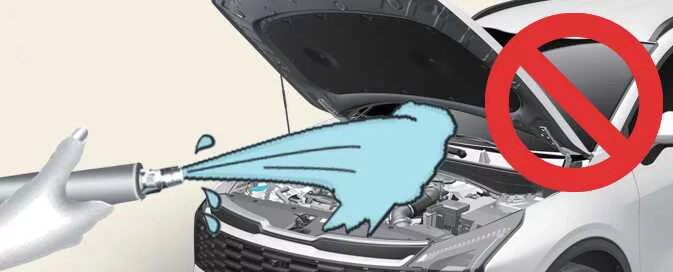
Keep the pressure-washer nozzle at a suitable distance from the vehicle. Washing too close or using excessive pressure can damage components or force water into the vehicle.
-
Do not direct high-pressure spray at the camera, sensors or the areas around them. The force of the water can interfere with their normal operation.
-
Keep the nozzle away from rubber or plastic boots and electrical connectors, which can be damaged by high-pressure water.
Caution
-
Washing the engine compartment, especially with high-pressure water, can damage electrical circuits in that area.
-
Keep water and other liquids away from electrical and electronic components inside the vehicle to prevent damage.
Waxing
Wax the vehicle when water no longer beads on the paint. Wash and dry the Kia Sportage before applying wax. Use a good-quality liquid or paste wax and follow the manufacturer's instructions. Waxing metal trim helps protect it and maintain its shine.
Removing oil, tar or similar substances with a spot remover can strip wax from the paint. Reapply wax to any treated area, even if the rest of the vehicle does not yet need waxing. Do not apply wax to embossed, unpainted parts, as it may dull their appearance.
Caution
-
Wiping dust or dirt from the body with a dry cloth can scratch the finish.
-
Do not use steel wool, abrasive cleaners, acid detergents or strong detergents containing highly alkaline or caustic agents on chrome-plated or anodised aluminium parts. These products can damage the protective coating and cause discolouration or deterioration of the finish.
Repairing paint damage
Repair deep scratches and stone chips in the paint as soon as possible. Exposed metal can rust quickly, turning a small repair into a more extensive one.
Note
If body damage requires metal repair or replacement, make sure the repair shop applies anti-corrosion materials to the repaired or replacement parts.
Bright-metal trim care
-
Use a tar remover to clear road tar and insects. Do not scrape them off with a sharp object.
-
Protect bright-metal surfaces from corrosion with wax or chrome preservative, then polish them to restore their shine.
-
In winter or in coastal areas, apply a heavier coating of wax or preservative to bright-metal parts. If needed, protect them with non-corrosive petroleum jelly or another suitable protective compound.
Underbody care
Salt and chemicals used to clear ice and snow, along with dust-control materials, can collect underneath the vehicle. If they are not removed, they can accelerate rust on underbody components such as fuel lines, the frame, floor pan and exhaust system, even when those parts have been treated for corrosion protection.
Rinse the underbody and wheel openings thoroughly with lukewarm or cold water once a month, after off-road driving and at the end of each winter. Give these areas particular attention because mud and dirt can be difficult to see. Wetting road grime without washing it away can make corrosion worse. Keep the drain holes along the lower edges of the doors, rocker panels and frame members clear so water cannot collect and cause rust.
Warning
After washing, drive slowly and test the brakes to check whether water has affected their performance. If braking feels reduced, dry the brakes by applying them lightly while maintaining a slow forward speed.
Aluminium wheel care
The aluminium wheels on the Kia Sportage have a clear protective coating.
-
Do not clean the wheels with abrasive cleaners, polishing compounds, solvents or wire brushes, as these can scratch or damage the finish.
-
Clean the wheels only after they have cooled.
-
Use mild soap or a neutral detergent and rinse thoroughly with water. Clean the wheels after driving on salted roads to help prevent corrosion.
-
Avoid washing the wheels with high-speed car-wash brushes.
-
Do not use alkaline or acidic detergents. They can damage or corrode the clear protective finish on the aluminium wheels.
Corrosion protection
Protecting your vehicle from corrosion
Kia uses advanced design and manufacturing practices to help protect vehicles from corrosion. Long-term protection also depends on regular care by the owner.
Common causes of corrosion
Corrosion most often develops when:
-
Road salt, dirt and moisture are allowed to build up underneath the vehicle.
-
Stones, gravel, abrasion or minor scrapes and dents damage the paint or protective coating, exposing the metal beneath.
Areas at higher risk of corrosion
Take extra care if the Kia Sportage is regularly exposed to corrosive materials. Common sources include road salt, dust-control chemicals, sea air and industrial pollution.
Moisture promotes corrosion
Moisture creates conditions that encourage corrosion. High humidity can make the problem worse, especially when temperatures are just above freezing, because damp conditions keep corrosive materials in contact with the vehicle for longer. Mud is particularly harmful: it dries slowly and can retain moisture even when its surface appears dry. High temperatures can also speed corrosion in areas with poor ventilation, where moisture cannot disperse easily.
For these reasons, keep the vehicle clean and free of mud and other deposits. This applies to visible body panels and, especially, the underside of the vehicle.
Preventing corrosion
You can help prevent corrosion from developing by following these care practices.
Keep the vehicle clean
Regular cleaning is one of the most effective ways to prevent corrosion, particularly underneath the vehicle where corrosive materials can collect.
-
If you live in an area with road salt, near the ocean, or where industrial pollution or acid rain is common, take extra care. In winter, rinse the underside of the Kia Sportage at least once a month and wash it thoroughly again when winter ends.
-
When cleaning beneath the vehicle, pay close attention to areas under the fenders and other places that are hidden from view. Remove mud and corrosive deposits completely; simply wetting accumulated grime can accelerate corrosion. High-pressure water and steam can help remove these deposits.
-
When cleaning the lower door panels, rocker panels and frame members, make sure their drain holes remain open so moisture can escape instead of collecting inside.
Keep the garage dry
A damp, poorly ventilated garage can encourage corrosion. This is especially relevant if you wash the vehicle in the garage or park it there while it is wet or covered with snow, ice or mud. A heated garage can also contribute to corrosion if it is not ventilated well enough to disperse moisture.
Maintain the paint and trim
Cover scratches and chips with touch-up paint as soon as possible to reduce the risk of corrosion. If bare metal is exposed, have the area assessed by a qualified body and paint repair shop.
Bird droppings are highly corrosive and can damage painted surfaces within a few hours. Remove them as soon as possible.
Do not neglect the interior
Moisture can collect beneath floor mats and carpeting and cause corrosion. Check under the mats periodically to make sure the carpeting is dry. Take particular care when carrying fertiliser, cleaning products or chemicals in the vehicle.
Carry these materials only in suitable containers. Clean up any spill or leak, rinse the area with clean water and dry it thoroughly.
 Appearance care
 Interior care
See also:
Roof Trim: Components and Components Location
Components
1. Roof trim2. Sunvisor [Driver''s]3. Sunvisor [Passenger''s]
Components [Panoramaroof]
1. Roof trim2. Sunvisor [Driver''s]3. Sunvisor [Passenger''s]
...
Components and Components Location
Component Location
1. Auto light sensor2. Head lamps3. Lighting switch (Auto)4. Tail lamps5. SJB (Smart Junction Box)6. BCM (Body Control Module)
...
Cruise indicators
CRUISE indicator
The indicator illuminates when the cruise control system is enabled. The cruise
indicator in the instrument cluster is illuminated when the cruise control ON-OFF
switch on the ...
Categories
- Home
- Kia Sportage NQ5 (2022-2026) Owner's Manual
- Kia Sportage QL (2015-2019) Owner's Manual
- Kia Sportage QL (2015-2019) Service Manual
- Kia Sportage SL 2010-2016 Owner's Manual
- Kia Sportage SL 2010-2016 Service Manual
