
 Kia Sportage: Gauges
The Kia Sportage gauges show key driving information, including vehicle speed, engine speed, fuel level and engine coolant temperature.
Speedometer
|
Figure 1. Type A 
|
Figure 2. Type B 
|
The speedometer shows how fast the Kia Sportage is travelling. Its scale is marked in kilometres per hour (km/h) and miles per hour (mph).
Tachometer
|
Figure 1. Type A 
|
Figure 2. Type B 
|
The tachometer shows the approximate engine speed in revolutions per minute (rpm).
Use the tachometer to help choose suitable shift points and avoid labouring the engine or allowing its speed to rise excessively.
CAUTION
Do not run the engine in the tachometer’s red zone. Doing so may cause severe engine damage.
Engine coolant temperature gauge
|
Figure 1. Type A 
|
Figure 2. Type B 
|
When the ignition switch or ENGINE START/STOP button is in the ON position, this gauge
indicates the engine coolant temperature.
CAUTION
If the gauge pointer moves beyond the normal range towards H (130), the engine may be overheating. Continued driving in this condition could damage the engine.
Do not continue driving with an overheated engine. If the Kia Sportage overheats, follow the instructions in the “If the engine overheats” section.
WARNING
Never remove the radiator cap while the engine is hot. The cooling system is pressurised, and escaping coolant could cause severe burns. Wait until the engine has cooled before adding coolant to the reservoir.
Fuel gauge
|
Figure 1. Type A 
|
Figure 2. Type B 
|
The fuel gauge indicates the approximate amount of fuel remaining in the tank.
NOTE
-
The fuel tank capacity is listed in “Recommended lubricants and capacities.”
-
A low fuel warning light supplements the gauge and illuminates when the tank is nearly empty.
-
When the Kia Sportage is on an incline or going around a curve, fuel movement inside the tank may cause the gauge pointer to fluctuate. The low fuel warning light may also illuminate earlier than usual.
WARNING
Fuel gauge
Running out of fuel can put the vehicle’s occupants at risk.
Refuel as soon as possible after the low fuel warning light comes on or the gauge approaches E (0).
CAUTION
Avoid driving with very little fuel in the tank. Running out of fuel may cause the engine to misfire and damage the catalytic converter.
Odometer
|
Figure 1. Type A 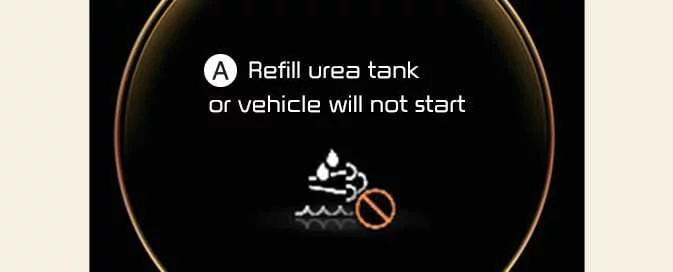
|
Figure 2. Type B 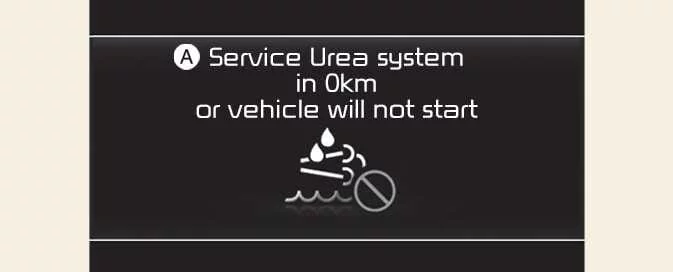
|
The odometer records the total distance the Kia Sportage has travelled. Use this reading to help determine when periodic maintenance is due.
-
Display range: 0–1,599,999 km or 0–999,999 miles.
Distance to empty
|
Figure 1. Type A 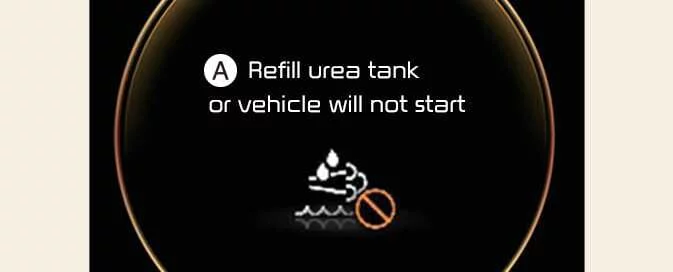
|
Figure 2. Type B 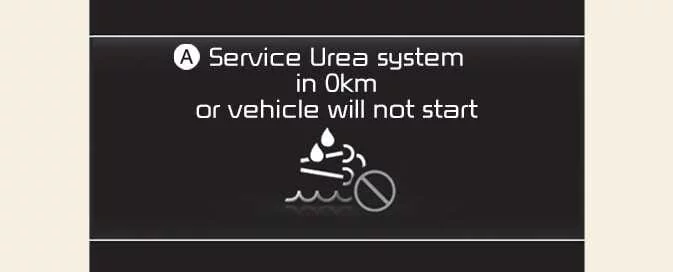
|
-
Distance to empty estimates how far the Kia Sportage can travel using the fuel remaining in the tank.
-
Display range: 1–9,999 km or 1–9,999 miles.
-
-
If the estimate falls below 1 km (1 mile), the cluster displays “---” instead of a distance.
-
If the transmission is not in P (Park) or N (Neutral) while refuelling, the added fuel may not be recognised correctly. The fuel level and distance-to-empty readings may then be inaccurate.
NOTE
-
The distance-to-empty display may not work accurately if the vehicle is not on level ground or if the battery power has been interrupted.
-
This reading is an estimate and may differ from the actual distance the Kia Sportage can travel.
-
The instrument cluster may not register additional fuel if less than 6 litres (1.6 gallons) is added.
-
Fuel economy and the estimated distance to empty can vary considerably with driving conditions, driving habits and the condition of the vehicle.
Outside temperature gauge
|
Figure 1. Type A 
|
Figure 2. Type B 
|
The outside temperature gauge shows the current ambient temperature in increments of 1°C (1°F).
-
Display range: −40°C to 60°C (−40°F to 140°F).
To help the driver stay focused on the road, the displayed temperature may respond more slowly to changes than a standard thermometer.
To switch the temperature display between Celsius and Fahrenheit, change the temperature unit in the infotainment system’s Setup menu.
 Instrument cluster
 Transmission shift indicator
See also:
Crosswind Stability Control (CSC). Electronic Control Suspension (ECS): (if equipped)
Crosswind Stability Control (CSC)
Crosswind Stability Control (CSC) works with ESC and Motor Driven Power Steering (MDPS) to help stabilise the vehicle
if a strong crosswind causes it to sway or lo ...
Rear Stabilizer Bar: Repair procedures
Replacement
1.
Remove the rear wheel & tire.
Tightening torque :
88.3 ~ 107.9N.m (9.0 ~ 11.0kgf.m, 65.1 ~ 79.6lb-ft)
Be careful not to damage to the hub bol ...
SS-B Solenoid Valve(ON/OFF): Schematic Diagrams
Circuit Diagram
...
Categories
- Home
- Kia Sportage NQ5 (2022-2026) Owner's Manual
- Kia Sportage QL (2015-2019) Owner's Manual
- Kia Sportage QL (2015-2019) Service Manual
- Kia Sportage SL 2010-2016 Owner's Manual
- Kia Sportage SL 2010-2016 Service Manual
