
 Kia Sportage: Overview
Equipment may vary by Kia Sportage trim, selected options and market. Some features shown or described here may not be fitted to every vehicle.
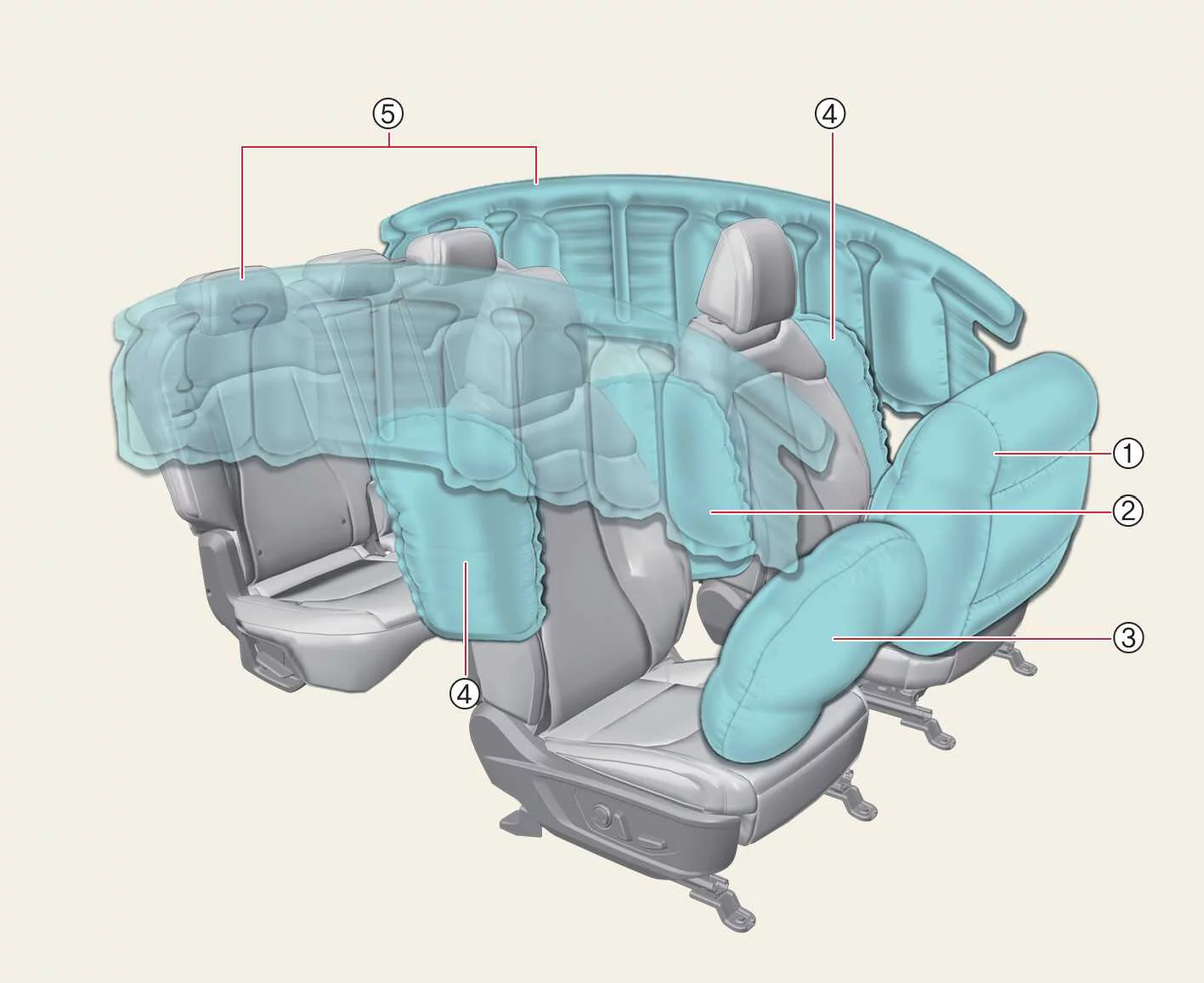
The air bags fitted to your vehicle may differ from those shown in the illustration.
-
Front passenger air bag
-
Front centre side air bag, if equipped
-
Driver's front air bag
-
Side air bag
-
Curtain air bag
An asterisk indicates equipment available only on vehicles fitted with that feature.
How does the air bag system operate?
-
Air bags are armed and able to inflate only when the vehicle is in the ON position. They may also activate for approximately 3 minutes after the ignition is switched off.
-
In a severe frontal or side collision, air bags inflate rapidly to help protect occupants from serious injury. Side air bags and curtain air bags provide this protection when fitted.
-
Air bag deployment depends on factors such as collision severity and direction. These factors determine whether the sensors send an electronic signal to deploy an air bag.
-
Front air bags inflate and deflate in an instant. Their deployment is generally too fast to see during a collision; you are more likely to see the deflated bags after the impact.
-
To help protect occupants in a severe collision, air bags must inflate quickly and move between the occupant and the vehicle structure before impact. This rapid deployment is an essential part of their design and helps reduce the risk of serious or life-threatening injury.
-
The force and speed of inflation can also cause injuries, including facial abrasions, bruising and broken bones.
-
-
Contact with the steering wheel air bag can be fatal in some circumstances, particularly if the occupant is sitting too close to the steering wheel.
Noise and smoke
When an air bag inflates, it produces a loud noise and releases smoke and powder into the cabin. This is a normal result of the air bag inflator operating. After deployment, breathing may feel uncomfortable because your chest has contacted the seat belt and air bag, and because smoke and powder are present in the cabin.
After an impact, open the doors and/or windows as soon as it is safe to do so. This helps clear the cabin and limits continued exposure to smoke and powder.
The smoke and powder are non-toxic, but they may irritate the skin, eyes, nose or throat. If irritation occurs, rinse the affected area with cold water immediately. Consult a doctor if symptoms continue.
 Precautions
WARNING
To reduce the risk of serious or fatal injury and get the greatest benefit from the restraint system, observe
these precautions:
Never place a child in ...
 Airbag warning and indicator light
Airbag warning light
Operating conditions
When the vehicle is switched on, the air bag warning light should illuminate for approximately 3–6 seconds, then
turn off.
Malf ...
Other Information:
Junction Turning function
The Junction Turning function responds in stages when it detects a possible collision while the vehicle is turning.
Depending on the situation, it may warn the driver, assist with emergency braking ...
Emergency towing precautions
Turn the ignition switch to ACC so the steering wheel isn’t locked.
Place the transaxle shift lever in N (Neutral).
Release the parking bake.
Press the brake pedal with more force than usua ...
Categories
- Home
- Kia Sportage NQ5 (2022-2026) Owner's Manual
- Kia Sportage QL (2015-2019) Owner's Manual
- Kia Sportage QL (2015-2019) Service Manual
- Kia Sportage SL 2010-2016 Owner's Manual
- Kia Sportage SL 2010-2016 Service Manual
