
 Kia Sportage: Towing
Towing Service
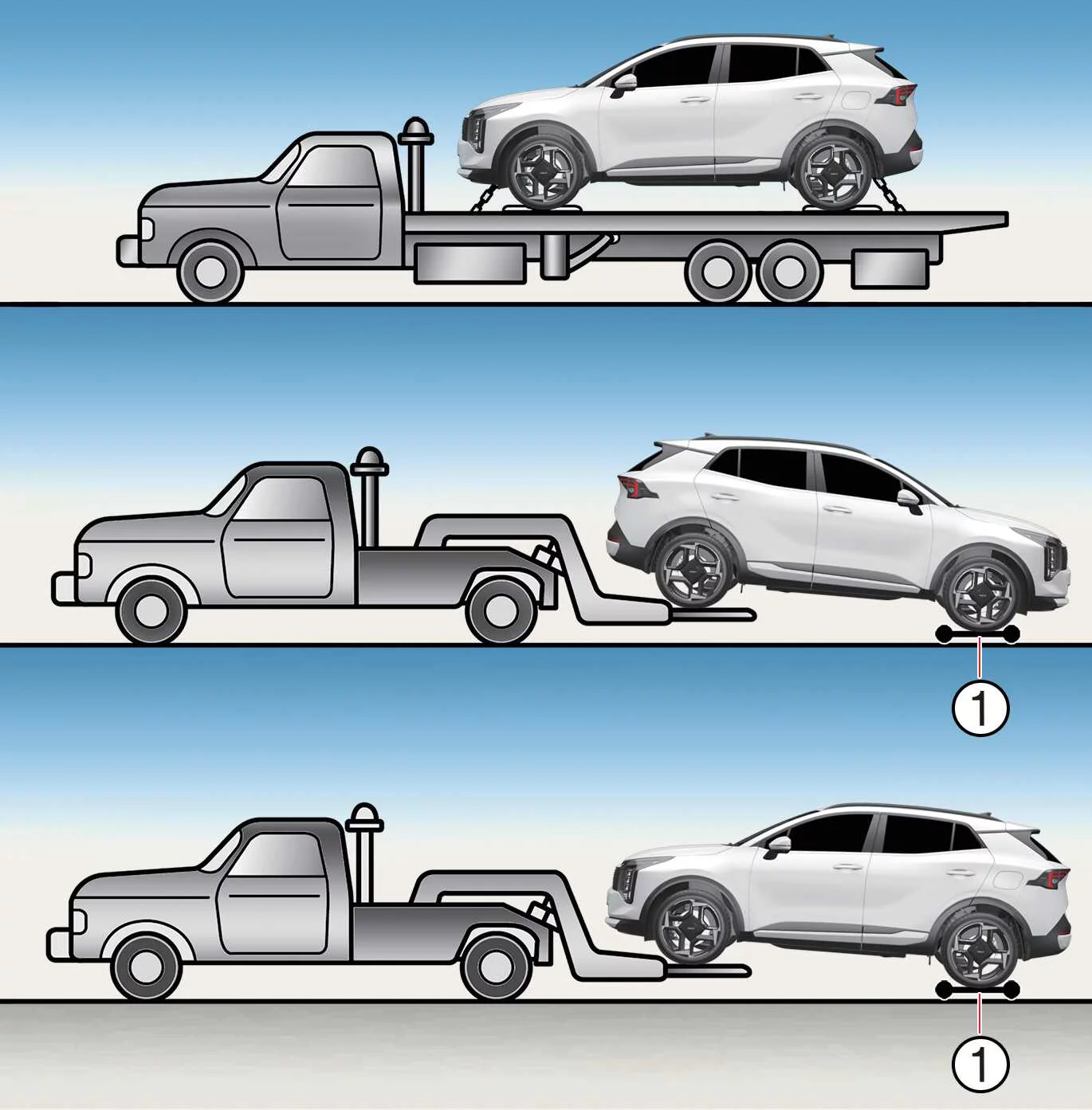 |
|
If the Kia Sportage needs to be towed, Kia recommends using an authorised Kia dealer or a commercial towing service.
Correct lifting and towing procedures help prevent vehicle damage. Use wheel dollies (1) or transport the vehicle on a flatbed tow truck.
WARNING
Side and curtain airbags
If the Kia Sportage is equipped with side and curtain airbags, set the vehicle to ACC while it is being towed. If the vehicle is in the ON position and the rollover sensor detects a situation as a rollover, the airbags may deploy.
CAUTION
Never tow an all-wheel-drive (AWD) Kia Sportage with its wheels on the ground. Always use wheel dollies or a flatbed tow truck. Towing it with the wheels on the ground may seriously damage the transmission and AWD system.
NOTE
- Before towing a vehicle with its tyres on the ground, shift to N (Neutral). For details, refer to the instructions for selecting N while the vehicle is in the ON position.
- If the Electronic Parking Brake (EPB) does not release normally, have the Kia Sportage transported on a flatbed tow truck to an authorised Kia dealer or service partner for inspection.
When a Flatbed Tow Truck Is Unavailable
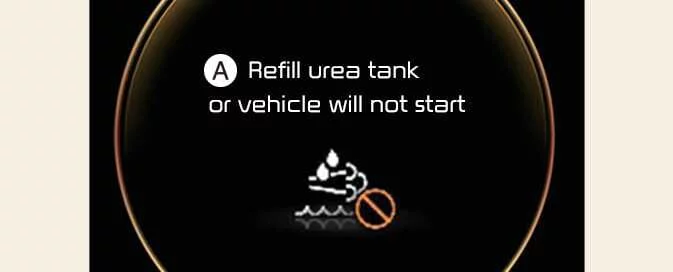 |
A two-wheel-drive vehicle may be towed with the other two tyres on the ground, without dollies, provided the parking brake is released before the vehicle is switched off.
If the Kia Sportage must be towed with only two wheels raised, make sure the driven wheels are lifted clear of the ground.
CAUTION
- If a wheel or suspension component is damaged, or if the vehicle must be towed with its driven wheels on the ground, place a towing dolly under the driven wheels.
- Do not use sling-type towing equipment. Use wheel-lift equipment or a flatbed tow truck.
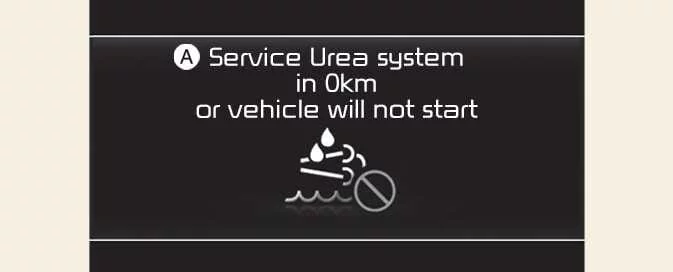
- Do not tow the Kia Sportage backwards with the driven wheels on the ground, as this may damage the vehicle.
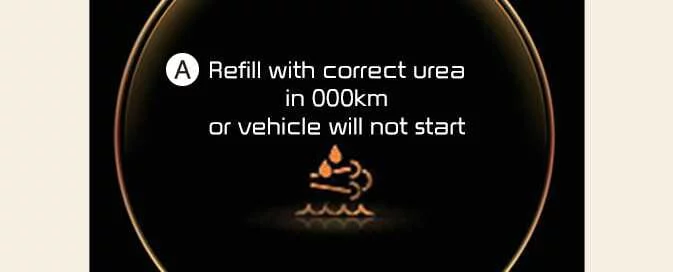
Precautions for Using Towing Hooks for Short-Distance Movement Before Towing the Vehicle
When moving the Kia Sportage to load it onto a tow truck or reposition it for towing, travel no faster than 5 km/h (3 mph) and no farther than 10 m (32 ft).
For this short movement, shift to N (Neutral) and release the parking brake. If the transmission or parking brake is not working, raise all four wheels using a towing dolly or tyre skates.
Emergency Towing
|
Figure 1. Front 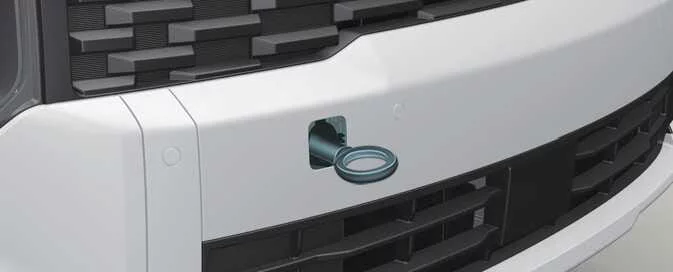
|
Figure 2. Rear 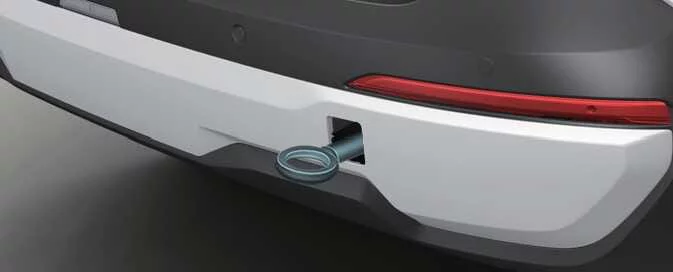
|
Procedure
-
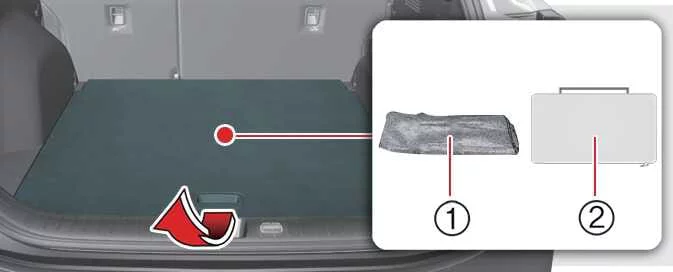
Lift the luggage board and take the towing hook from the tool case (1) or, if equipped, the Tyre Mobility Kit case (2).
-
Press the lower part of the bumper hole cover to remove it.
-
Insert the towing hook into the opening and turn it clockwise until it is securely fitted.
-
After towing, remove the hook and refit the bumper cover.
TIP
Emergency towing with the hook is suitable only for short distances at low speed on hard-surfaced roads. The wheels, axles, powertrain, steering, and brakes must all be in good condition.
- If towing is necessary, Kia recommends using an authorised Kia dealer or a commercial towing service. If professional towing is unavailable during an emergency, the Kia Sportage may be moved temporarily with a cable or chain attached to the front or rear emergency towing hook. Use extreme caution. A driver must remain in the vehicle to steer and operate the brakes.
- Do not use the towing hooks to pull the Kia Sportage out of mud, sand, or another place where it cannot move under its own power.
- Do not tow a vehicle that is heavier than the vehicle doing the towing.
- The drivers of both vehicles should communicate frequently throughout the tow.
- Before towing, check that the emergency hook is not broken or damaged.
- Securely attach the towing cable or chain to the hook.
- Do not jerk the hook. Pull steadily and apply force evenly.
- To avoid damaging the hook, do not pull sideways or at an upward or downward angle. Keep the towing line straight ahead.
- Shift the gear to N (Neutral).
- Release the parking brake.
- For a manual-transmission vehicle, tow at 25 km/h (15 mph) or less and for no more than 20 km (12 miles).
- For an automatic-transmission or dual-clutch-transmission vehicle, keep the speed below 15 km/h (10 mph) and the towing distance under 1.5 km (1 mile) to avoid serious transmission damage.
- Press the brake pedal harder than usual because braking performance will be reduced.
- Steering will require more effort because power steering will be disabled.
- During a long downhill tow, the brakes may overheat and become less effective. Stop regularly to allow them to cool.
- The driver must remain in the towed vehicle to steer and brake. Do not allow passengers to ride in it.
WARNING
Use extreme care when towing the Kia Sportage.
- Avoid sudden starts and erratic manoeuvres that place excessive strain on the towing hook, cable, or chain. These parts may break and cause serious injury or vehicle damage.
- If the disabled vehicle cannot be moved, do not continue pulling it by force. Contact an authorised Kia dealer or a commercial towing service for assistance.
- Keep the vehicle moving as straight ahead as possible while it is being towed.
- Stay clear of the vehicle during towing.
CAUTION
- Attach the towing strap to the designated towing hook.
- Using any part of the vehicle other than the towing hooks can damage the body.
- Use only a cable or chain designed for vehicle towing, and secure it firmly to the supplied towing hook.
- Accelerate and decelerate gradually while keeping tension on the towing rope or chain. Abrupt changes in tension may damage the hooks or vehicle.
- If the Kia Sportage is towed with all four wheels on the ground, it must be towed from the front only. Make sure the transmission is in Neutral. A driver must remain in the towed vehicle to operate the steering and brakes.
- Before towing an automatic- or dual-clutch-transmission vehicle, check underneath for transmission-fluid leaks. If fluid is leaking, use a flatbed tow truck or towing dolly.
 Safe Use of the Tyre Mobility Kit
 Emergency Equipment: If Equipped
See also:
Front Door: Repair procedures
Replacement
Front Door Trim Replacement
•
Take care not to scratch the door trim and other parts.
•
Put on gloves to protect your hands.
1.
...
Cruise Control Switch: Repair procedures
Removal and Installation
1.
Disconnect the battery (-) terminal.
Tightening torque:
Without battery sensor :
7.8 ~ 9.8N.m (0.8 ~ 1.0kgf.m, 5.8 ~ 7.2lb-ft)
With battery sensor :
4.0 ~ 6.0N ...
Components and Components Location
Component Location
1. Driver power window main switch2. Passenger window switch3. Front window motor4. Rear window motor5. Rear window switch
...
Categories
- Home
- Kia Sportage NQ5 (2022-2026) Owner's Manual
- Kia Sportage QL (2015-2019) Owner's Manual
- Kia Sportage QL (2015-2019) Service Manual
- Kia Sportage SL 2010-2016 Owner's Manual
- Kia Sportage SL 2010-2016 Service Manual
