
 Kia Sportage: Limitations of Forward Collision-Avoidance Assist
Forward Collision-Avoidance Assist may not work as intended, or may respond unexpectedly, in the following situations. Keep in mind that its operation depends on the detecting sensors, visibility and surrounding traffic conditions.
-
A detecting sensor or the area around it is dirty, obstructed or damaged.
-
The temperature around the front view camera is very high or very low because of the surrounding conditions.
-
The camera view is affected by a tinted, filmed or coated windscreen; damaged glass; or sticky material on the glass, such as a sticker or insect.
-
Moisture remains on the windscreen or has frozen on it.
-
Washer fluid is being sprayed continuously or the wipers are operating.
-
You are driving in heavy rain, snow or dense fog.
-
Sun glare obstructs the front view camera’s field of vision.
-
Streetlights or headlights from oncoming traffic reflect off a wet road, including from puddles.
-
An object is placed on the instrument panel.
-
Your Kia Sportage is being towed.
-
The surroundings are extremely bright or dark, such as inside a tunnel.
-
Light levels change suddenly, for example when entering or leaving a tunnel.
-
It is dark outside and the headlamps are off or do not provide sufficient brightness.
-
Only part of a vehicle, powered two-wheeler, pedestrian or cyclist is visible to the system.
-
The vehicle or powered two-wheeler ahead is a bus, heavy truck, truck carrying an unusually shaped load, trailer or similar vehicle.
-
The vehicle or powered two-wheeler ahead has no tail lamps, or its tail lamps are positioned unusually.
-
It is dark outside and the vehicle ahead’s tail lamps are off or too dim to be seen clearly.
-
The rear of the vehicle ahead is small or appears unusual, for example because the vehicle is tilted, overturned or viewed from the side.
-
The vehicle ahead has unusually low or high ground clearance.
-
A vehicle, powered two-wheeler, pedestrian or cyclist suddenly moves into your path.
-
The bumper around the front radar has been struck or damaged, or the radar has moved out of position.
-
The temperature around the front radar is very high or very low.
-
You are driving through a tunnel or across an iron bridge.
-
You are travelling through a large open area with few vehicles or structures, such as a desert, meadow or suburb.
-
You are driving near metal structures or materials, such as in a construction area or near a railway.
-
A highly reflective object, such as a guardrail or nearby vehicle, is close to the front radar.
-
The cyclist ahead is riding a bicycle made from material that does not reflect the front radar signal.
-
The vehicle or powered two-wheeler ahead is detected late.
-
An obstacle suddenly blocks the vehicle or powered two-wheeler ahead.
-
The vehicle or powered two-wheeler ahead changes lanes or slows down suddenly.
-
The vehicle or powered two-wheeler ahead is deformed.
-
The vehicle ahead is covered with snow.
-
You are moving out of a lane or returning to one.
-
The vehicle is being driven erratically.
-
You are on a roundabout and the vehicle or powered two-wheeler ahead is not detected.
-
You are driving in a continuous circle.
-
The vehicle or powered two-wheeler ahead has an unusual shape.
-
The vehicle or powered two-wheeler ahead is travelling uphill or downhill.
-
A pedestrian or cyclist is not fully visible to the system, for example, because the pedestrian is leaning forward or is not walking upright.
-
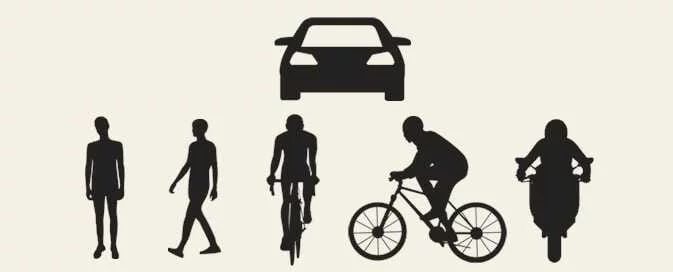
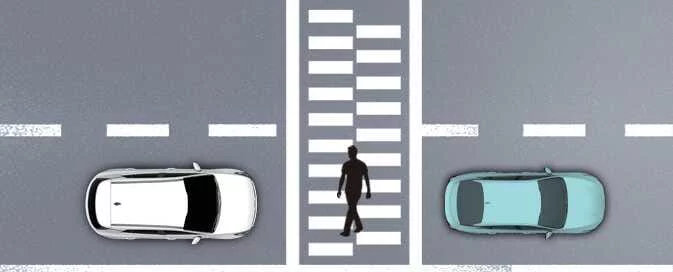
The illustration shows examples of vehicles, powered two-wheelers, pedestrians and cyclists that the front view camera and front radar may be able to detect.
-
A pedestrian or cyclist wears clothing or equipment that makes them difficult to detect.
-
A pedestrian or cyclist ahead is moving very quickly.
-
A pedestrian or cyclist ahead is short or is in a low posture.
-
A pedestrian or cyclist has limited mobility or is moving across your direction of travel.
-
A group of pedestrians or cyclists, or a large crowd, is ahead.
-
A pedestrian or cyclist wears clothing that blends into the background.
-
A pedestrian or cyclist is difficult to distinguish from a similarly shaped object or structure nearby.
-
You are passing pedestrians, cyclists, traffic signs or structures near an intersection.
-
System operation may also be affected in the following places or conditions:
-
Driving through steam, smoke or shadow.
-
Driving through a tunnel or across an iron bridge.
-
Driving through a large open area with few vehicles or structures, such as a desert, meadow or suburb.
-
Driving in a car park.
-
Passing through a tollgate, construction area, partly paved road, rough surface or over a speed bump.
-
Driving near metal structures or materials, such as a construction area or railway.
-
Travelling on an inclined or curved road.
-
Driving beside trees or streetlights.
-
Driving along a narrow road where trees or grass have grown over the roadside.
-
Electromagnetic interference is present, such as strong radio signals or electrical noise.
-
-
Rough road conditions cause excessive vibration while driving.
-
The vehicle’s ride height is unusually low or high because of a heavy load, incorrect tyre pressure or another condition.
-
The vehicle is fitted with snow chains, a spare tyre or a wheel of a different size.
Junction Crossing, Lane-Change Oncoming, Lane-Change Side and Evasive Steering Assist functions: (if equipped)
-
The temperature around the front-corner or rear-corner radar is very high or very low.
-
A trailer or carrier is fitted near the rear-corner radar.
-
Snow, rain, dirt or other material covers the front-corner or rear-corner radar.
-
Objects such as a bumper sticker, bumper guard or bicycle rack cover the bumper area around a front-corner or rear-corner radar.
-
The bumper around a front-corner or rear-corner radar is damaged or has been struck, or the radar is out of position.
-
Other vehicles, walls or pillars block a front-corner or rear-corner radar.
-
You are driving on a highway or motorway ramp.
-
You are travelling beside a guardrail or wall with a double structure.
-
Another vehicle or powered two-wheeler follows very close behind, or passes your Kia Sportage at close range.
-
Another vehicle or powered two-wheeler is travelling so fast that it passes your vehicle in a short time.
-
Your vehicle passes another vehicle or powered two-wheeler.
-
Your vehicle starts moving at the same time as a vehicle or powered two-wheeler beside it and then accelerates.
-
A vehicle or powered two-wheeler in the adjacent lane moves two lanes away, or a vehicle two lanes away moves into the adjacent lane.
-
A motorcycle or bicycle is detected.
-
A vehicle such as a flatbed trailer is detected.
-
A large vehicle, such as a bus or truck, is detected.
-
A small moving object, such as a pedestrian, animal, shopping cart or pushchair, is detected.
-
A low vehicle, such as a sports car, is detected.
-
Rain, snow, dust, sand, oil or standing water makes the lane markings difficult to see.
-
The lane marking is difficult to distinguish from the road surface.
-
Road markings near the lane resemble the lane markings.
-
A median strip, trees, guardrails, noise barriers or other objects cast a shadow over a lane marking.
-
The number of lanes increases or decreases, or lane markings cross one another.
-
The road has more than two lane markings.
-
Lane markings are complicated or replaced by temporary structures, such as those used in a construction area.
-
The road has other markings, such as zigzag lines, crosswalk markings or road signs.
-
A lane marking ends suddenly, for example at an intersection.
-
The lane is unusually wide or narrow.
-
A kerb or road edge is present without a lane marking.
-
The vehicle ahead is driving with one side on a lane marking.
-
The distance to the vehicle ahead is extremely short.
NOTE
For further information about detecting vehicles near the rear corners and precautions concerning the rear-corner sensors, refer to “Blind-Spot Collision-Avoidance Assist (BCA).”
Limitations of Evasive Steering Assist
Evasive Steering Assist may not operate as intended in the following situations:
-
The pedestrian or cyclist is outside the function’s operating area.
-
The pedestrian or cyclist is moving laterally across the vehicle’s path.
-
The pedestrian or cyclist is within the operating area, but there is not enough room to steer around them.
WARNING
-
Driving on a curved road
On a curve, Forward Collision-Avoidance Assist may not detect a vehicle, powered two-wheeler, pedestrian or cyclist ahead. This can reduce sensor performance and may prevent a warning, braking assistance or steering assistance, if equipped, when it is needed.
Maintain a safe braking distance while cornering. If necessary, steer and apply the brakes to reduce speed and preserve a safe gap.
On a curved road, the system may detect a vehicle, powered two-wheeler, pedestrian or cyclist in the adjacent lane or outside your lane.
This may cause the system to issue an unnecessary warning or apply braking or steering assistance, if equipped. Always check the traffic around your Kia Sportage.
-
Driving on an inclined road
When travelling uphill or downhill, Forward Collision-Avoidance Assist may not detect vehicles, powered two-wheelers, pedestrians or cyclists ahead. This can affect sensor performance.
As a result, the system may issue an unnecessary warning or apply braking or steering assistance, if equipped. It may also fail to warn or assist when required.
If a vehicle, powered two-wheeler, pedestrian or cyclist ahead is detected suddenly, your vehicle’s speed may decrease rapidly.
Keep your attention on the road when driving uphill or downhill. If necessary, steer and apply the brakes to reduce speed and maintain a safe distance.
-
Changing lanes


-
Your vehicle
-
Vehicle changing lanes
-
Vehicle in the same lane
A vehicle (2) moving into your lane from an adjacent lane may not be detected until it enters the sensor’s detection range.
If the vehicle changes lanes suddenly, Forward Collision-Avoidance Assist may not detect it immediately. Maintain a safe braking distance and, if necessary, steer and apply the brakes to reduce speed and keep a safe gap.
If the vehicle ahead (2) moves out of your lane, Forward Collision-Avoidance Assist may not immediately detect the vehicle (3) now in front of you. Maintain a safe braking distance and, if necessary, steer and apply the brakes to reduce speed and keep a safe gap.
-
-
Detecting a vehicle
Take extra care if the vehicle ahead has cargo extending behind its cab or has unusually high ground clearance. Forward Collision-Avoidance Assist may not detect cargo that projects from the vehicle. Keep a safe distance from the rearmost object and, if necessary, steer and apply the brakes to reduce speed and maintain that distance.
-
When towing a trailer or another vehicle, Kia recommends switching Forward Collision-Avoidance Assist off for safety.
-
The system may respond to objects that resemble vehicles, powered two-wheelers, pedestrians or cyclists.
-
Forward Collision-Avoidance Assist does not operate for bicycles, motorcycles or smaller wheeled objects such as luggage bags, shopping carts or strollers.
-
Strong electromagnetic interference may prevent Forward Collision-Avoidance Assist from operating normally.
-
Forward Collision-Avoidance Assist may not operate for 15 seconds after the vehicle is started or while the front view camera is initialising.
TIP
For details about detecting vehicles near the rear corners and precautions for the rear-corner sensors, refer to “Blind-Spot Collision-Avoidance Assist (BCA).”
 Forward Collision-Avoidance Assist malfunction
 Lane Keeping Assist (LKA): (if equipped)
See also:
Telemetics Unit (TMU): Repair procedures
Removal
•
Take care not to scratch the crash pad and related parts.
1.
Disconnect the negative (-) battery terminal.
2.
Remove the crash pad garnis...
Engine Mounting: Components and Components Location
Components
1. Transaxle mounting bracket 2. Roll rod bracket3. Sub frame 4. Engine mounting bracket5. Engine mounting support bracket
...
Inhibitor Switch: Description and Operation
Description
Inhibitor Switch monitors the lever''s position(P, R, N, D) and is used to control gear setting signals....
Categories
- Home
- Kia Sportage NQ5 (2022-2026) Owner's Manual
- Kia Sportage QL (2015-2019) Owner's Manual
- Kia Sportage QL (2015-2019) Service Manual
- Kia Sportage SL 2010-2016 Owner's Manual
- Kia Sportage SL 2010-2016 Service Manual
