
 Kia Sportage: TPMS Receiver: Description and Operation
Third generation SL (2010–2016) / Kia Sportage SL Service & Repair Manual / Suspension System / Tire Pressure Monitoring System / TPMS Receiver: Description and Operation
| Description |
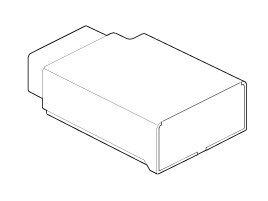
| 1. |
Mode
|
| 2. |
Overview
|
| Operation |
| 1. |
General Function
|
| 2. |
General Conditions to Learn New Sensors:
|
| 3. |
General Conditions to Un-Learn a sensor that is removed:
|
 TPMS Sensor: Repair procedures
Removal
Tire Removal
1.
Deflate tire & remove balance weights.
Sensor can be unscrewed before unseat the tire bead.
•
Th ...
 TPMS Receiver: Schematic Diagrams
Schematic Diagrams
TPMS Receiver Circuit Diagram
Harness Connector
PinDescription1Battery2CAN_High3GND4-5-6-7IGN8CAN_Low9-10-11-12-
...
Other Information:
Battery: Repair procedures
Removal and Installation
1.
Remove the battery.
(1)
Disconnect the battery negative terminal (A).
Tightening torque :
4.0 ~ 6.0N.m (0.4 ~ 0.6kgf.m, 3.0 ~ 4.4lb-ft)
(2)
Disconnect the ...
Illuminated ENGINE START/STOP button
Whenever the front door is opened, the ENGINE START/STOP button will illuminate
for your convenience. The light will go off after about 30 seconds when the door
is closed. It will also go off im ...
Categories
- Home
- Kia Sportage QL (2015-2019) Owners Manual
- Kia Sportage QL (2015-2019) Service Manual
- Kia Sportage SL 2010-2016 Owners Manual
- Kia Sportage SL 2010-2016 Service Manual

Copyright © www.kispmanual.com 2014-2026